- What is WordPress
- What components make up WordPress
- Two different WordPress: the difference between .org and .com
- What are the advantages of WordPress for website owners
- What are the disadvantages of WordPress for website owners
- What websites are created on WordPress in 2026
- How to start working with WordPress in 2026
You can create a website using commercial SaaS giants, Headless tools, or AI builders. Despite the wide choice, the most demanded CMS remains WordPress — a content management system that has evolved over 23 years from a platform for personal blogs to a vast ecosystem that powers about 42% of the entire internet. So, let’s delve deeper into what WordPress is, its important advantages and disadvantages, and for which internet projects it can be used in 2026.
What is WordPress
WordPress is a free, open-source CMS (Content Management System) that allows you to create websites and manage content. For developing even large online projects, you don’t necessarily need to understand the technical side, as there are templates and plugins that can ensure security, fast performance, and search engine optimization.

Examples of websites on WordPress
Unlike website builders such as Wix, Squarespace, and Weblium, WordPress offers complete control. A builder is like a “rented apartment”: convenient, but you are limited by the owner’s rules and dependent on their decisions. WordPress is like a “own house”: there is virtual hosting or a VPS server (land), a content management system (building), themes and plugins (renovation and furniture). You have more responsibility and the risk of breaking something, but you have full control.
What components make up WordPress
- Core — the foundation of the system. It is responsible for the basic logic of operation: PHP request processing, interaction with MySQL/MariaDB (data storage system), authorization and access rights, security, and update mechanisms.
- Themes — determine the appearance and structure. There are classic (PHP with Theme Customizer) templates and modern block FSE (Full Site Editing) themes, where the entire site is edited in a block editor without access to the code.
- Plugins — extend functionality. For contact forms, there’s Contact Form 7, for SEO optimization — Rank Math or Yoast, for online stores — WooCommerce. There are over 60,000 plugins for WordPress in the official catalog, and together with paid marketplaces, the ecosystem exceeds 90,000.
- Block editor Gutenberg — the standard interface for writing content. Instead of a classic text field, there’s a set of blocks: paragraphs, images, buttons, tables, videos, icons. In the block editor, a full-fledged Site Editor is available, where you edit not only posts but also headers, footers, and page templates.
Two different WordPress: the difference between .org and .com
There are two different versions of the CMS. WordPress.org is the free version with full control over the site and responsibility for it. You have complete freedom in choosing themes, plugins, and modifying code, but you handle the technical issues yourself. WordPress.com is a paid platform with pre-installed hosting and domain, usage requirements, and limitations. Although you have to pay monthly for using the platform, the development team will take care of all core, plugin, and theme updates, ensure security, and provide qualified answers to all your questions.
For most owners of serious projects, including blogs, business resources, and online stores, the right choice is WordPress.org. It offers complete freedom, scalability, and independence from a single company. WordPress.com is justified if you want minimal technical burden and a small project without complex customization requirements. But again — this small project can be quickly created without external help, especially since Cityhost offers one-click CMS installation.
What are the advantages of WordPress for website owners
The main advantage is the simple process of creating and managing websites. You can change the appearance of the web resource and add new features without programming knowledge. At the same time, you have access to the code, the ability to connect third-party services via API, and built-in artificial intelligence in WordPress 7.0, which allows you to scale the project while maintaining full control over it.
- Free quick start
- Gradual scaling
- Easy management of posts and pages
- Secure teamwork
- Automation through artificial intelligence
Free quick start
To create a WordPress site, you don’t even need to go to the official site and install the CMS, as modern hosting providers instantly provide a ready web resource. For example, you can order WordPress hosting at Cityhost: choose a plan, click “Buy”, register, and make a payment. After that, you get hosting on which you can install the CMS with one click.
You will already have a standard theme and plugins, meaning you will become the owner of a full-fledged online project. And the GPLv2 license is free forever: you fully own the site and its content. Even in the worst-case scenario, if WordPress ceases to exist as a project — the code remains with you.
Gradual scaling
You don’t have to buy a premium theme and install many plugins right away. You can work with a free standard template or functional free versions of paid themes.

I have been using Blocksy Free for 1.5 years, which has extensive options for changing the appearance and expanding the capabilities of the site.
However, when you want to scale the web resource, for example, turning a regular blog into an entertainment platform, there are special themes and over 60,000 plugins available in the official repository. And useful resources with personal experience for improving CMS management skills and website promotion can always be found in the Cityhost blog.
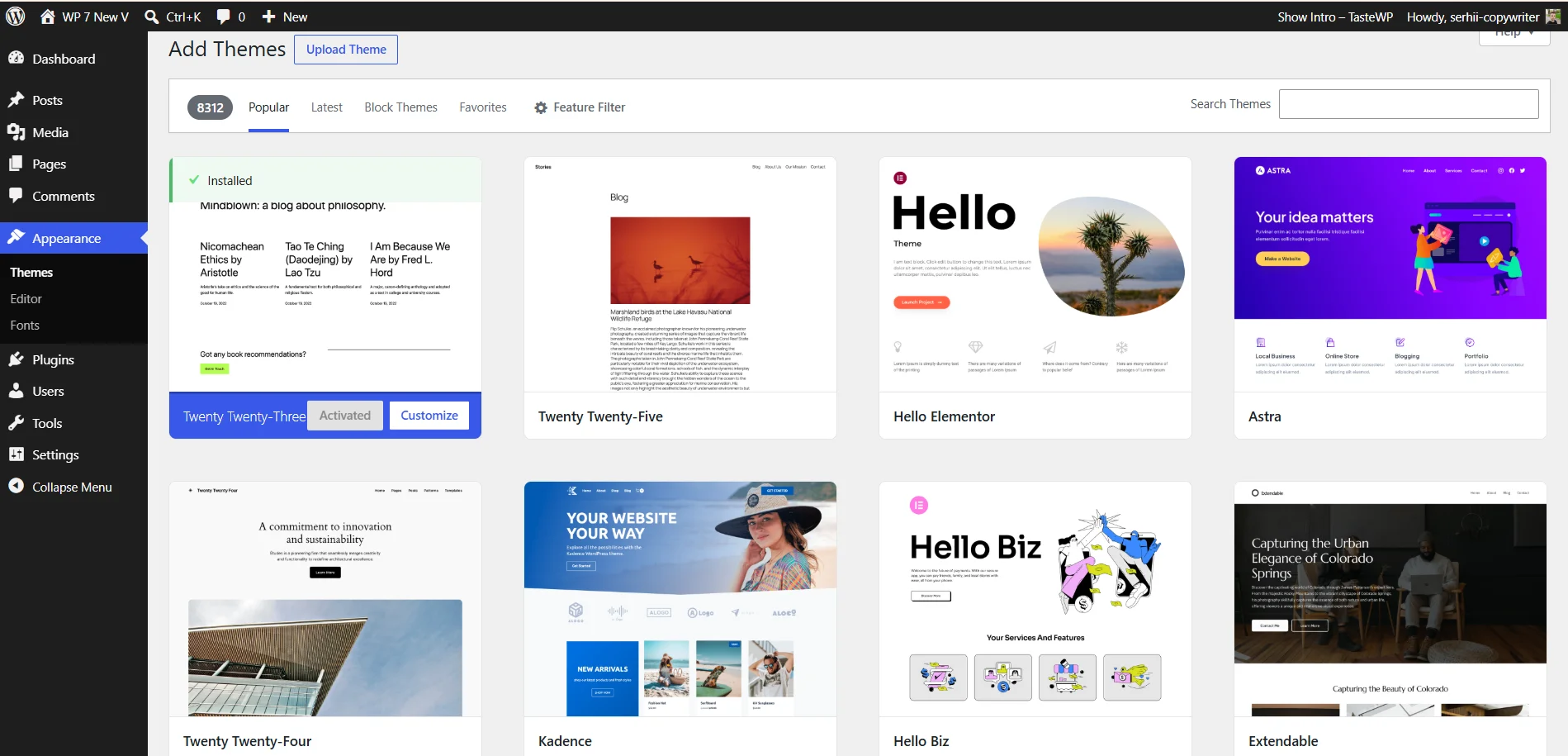
There are over 8300 templates in the official WordPress repository
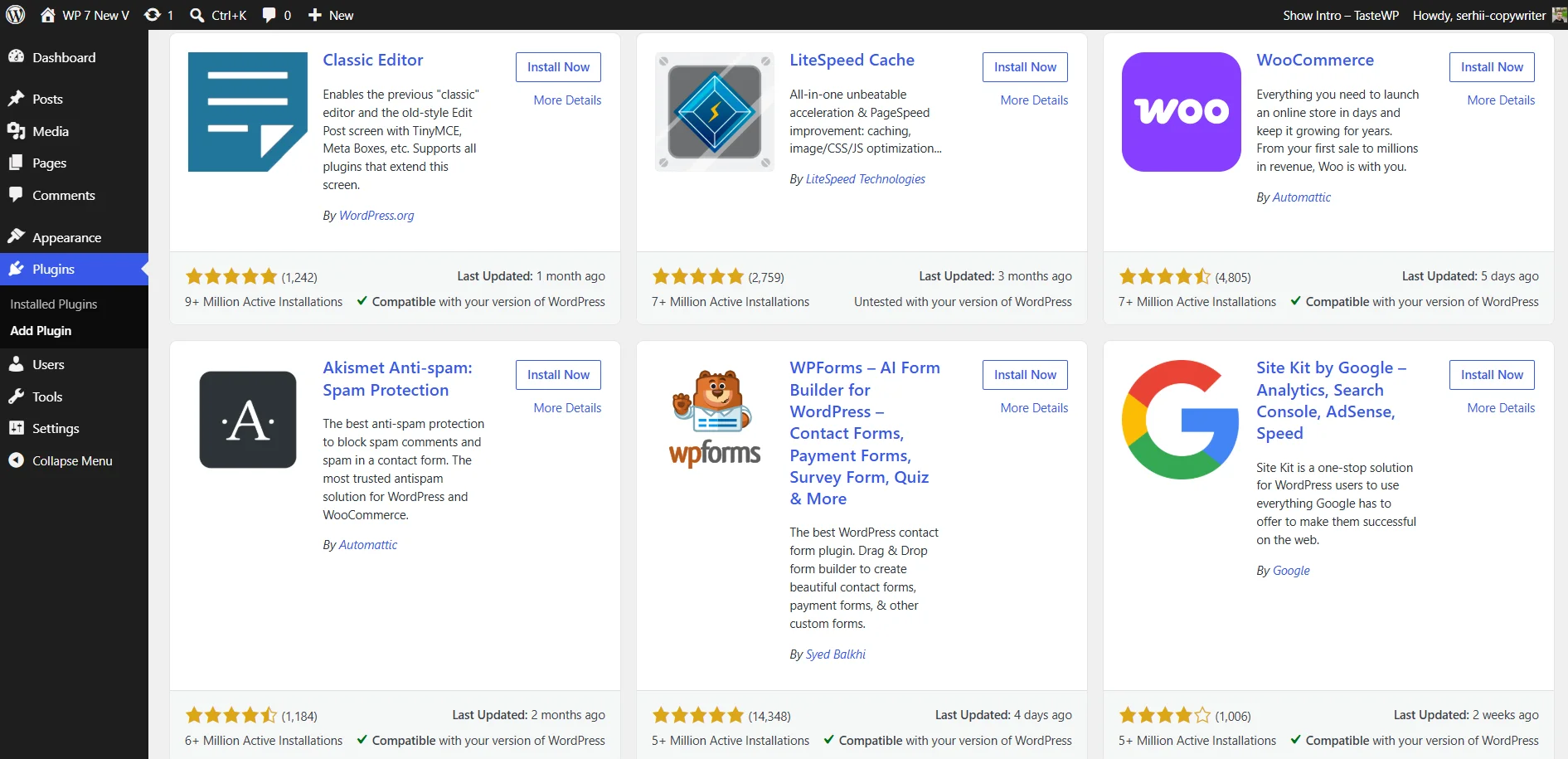
The official catalog contains over 60,000 plugins with descriptions, ratings, reviews, and compatibility checks with the installed version of WordPress.
Easy management of posts and pages
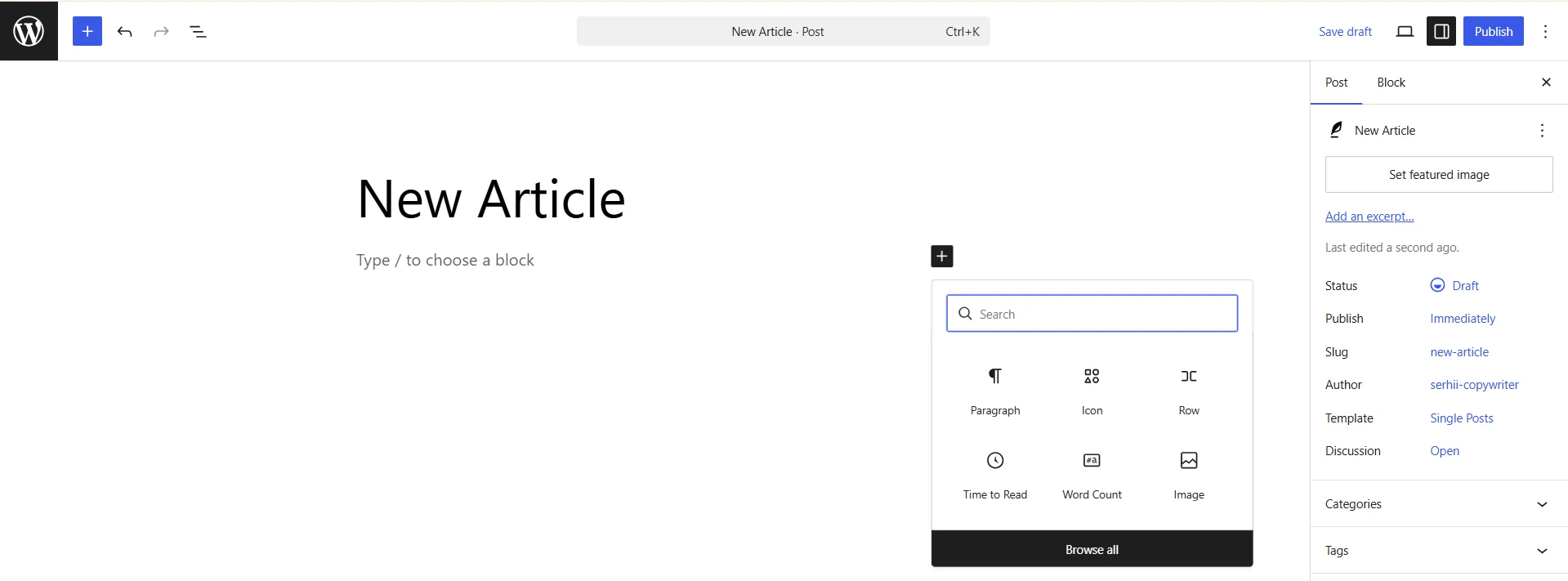
The appearance of the Gutenberg editor for writing, editing, and publishing posts.
On WordPress, you can turn your regular text from Google Docs into a well-designed interesting web page. Gutenberg provides many useful blocks: from text blocks and subheadings to images, videos, icons, buttons, columns, YouTube, and Spotify players. Even basic themes have a convenient visual interface that allows you to change the appearance of the online project without programming skills.
Secure teamwork
You don’t have to work on the site alone or trust it to just one person. And you don’t need to worry that someone will steal the internet project, as WordPress allows you to create separate accounts for team members or freelancers.
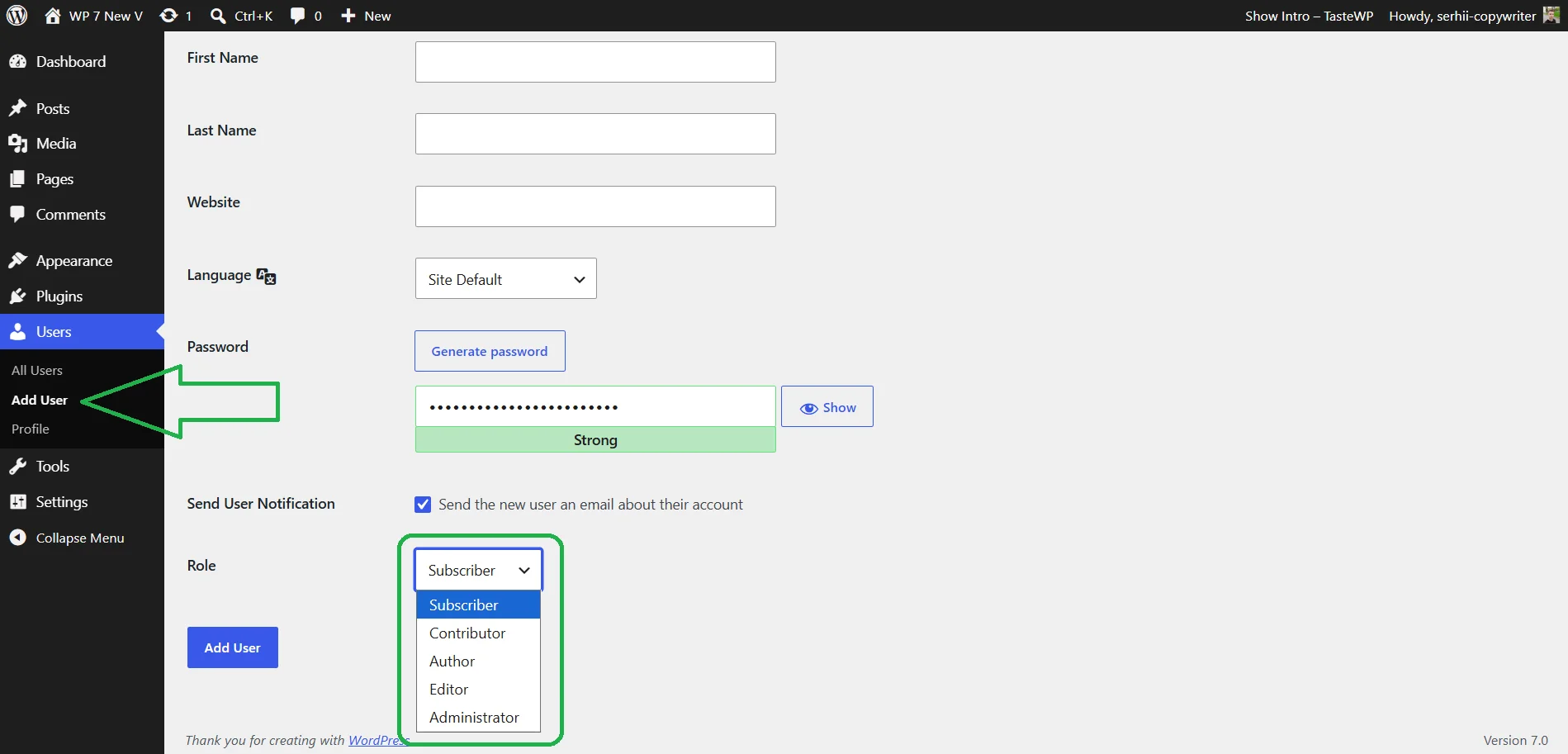
To do this, simply go to “Users” → “Add User”, enter the person’s details, and assign one of the roles. For example, a “Contributor” can create and edit only their posts but cannot publish materials on the web resource (they go for review), delete texts after publication, or upload images or files to the media library. Only the administrator has full access.
Automation through artificial intelligence
I have already talked about the best AI plugins for the site, which allow you to work with text and visual content, add custom functions, and automate customer support. And with the release of WordPress 7.0, which was released on May 20, 2026, you don’t even have to pay for some extensions — the AI infrastructure is built right into the core.
A significant advantage of WordPress is its integration via API with Claude, ChatGPT, Gemini. You can maximize automation through services like Make.com, Zapier, or n8n. For example, artificial intelligence can write an article in Google Docs, then automatically transfer it to the admin panel and save it as a draft. You just need to check the material and click “Publish”.
What are the disadvantages of WordPress for website owners
Although the CMS remains the most popular and is regularly updated, key disadvantages of WordPress such as dependence on plugins and themes should not be ignored even in 2026. Any template and plugin, if misused, can lead to slow loading of the web resource and technical errors. Moreover — hackers often exploit vulnerabilities in extensions to hack websites.
- The protection of the internet project is in your hands
- Risk of installing too many plugins
- Speed requires adjustments
- Gradual complexity of learning
The protection of the internet project is in your hands
WordPress sites experience about 90,000 attacks per minute. However, according to Patchstack State of WordPress Security 2026, in 2025, only two vulnerabilities were found in the core out of over 11,000 documented across the entire ecosystem — less than 0.02%.
But sites are still often hacked due to human factors. Brute force (automatic password guessing for /wp-admin) remains one of the most common attacks. The core protects against code hacking, but it cannot prevent it if the administrator sets the password to 123456. Similarly, plugins and themes that are installed from unverified sources or have not been updated for years are often hacked. Therefore, security is always your responsibility: two-factor authentication, regular updates, reliable hosting, a verified security plugin.

Data from my WordPress site through the Wordfence plugin. Just today, there have been 60 brute force attempts recorded.
Also read: How to protect your WordPress site and not become a victim of open code vulnerabilities
Risk of installing too many plugins
Although developers try to maximize functionality, for example, Rank Math SEO allows creating sitemap.xml, monitoring 404 errors, and setting redirects, conducting page optimization analysis, and even has its own AI. However, there is still a tendency, especially among beginners, to want to try all possible solutions by installing 30-50 plugins.
And it’s one thing to install, activate, test, and remove (if it doesn’t fit), another to conduct testing and immediately add several identical function extensions. Most plugins load their own CSS and JavaScript on all pages of the site — even where they are not used. The result is a heavy and slow site. So try to minimize the number of installed plugins.
Speed requires adjustments
By default, WordPress is not the fastest platform. Plus, each installed plugin, like the theme itself, increases the load on the web resource, which without additional actions leads to decreased page loading speed. Therefore, you will need to monitor Core Web Vitals, optimizing the site with cache plugins, such as LiteSpeed Cache, adding optimized images, and of course using quality virtual hosting with NVMe disks.
Also read: Main metrics for website loading speed
Gradual complexity of learning
WordPress is a convenient, effective, and understandable content management system for beginners. You can install a standard theme, such as Twenty Twenty-Five, and a basic list of plugins that perform their key tasks right after activation.
However, each theme is unique. For my review site, I previously used Blocksy Theme with the Product Reviews module. Only over time did I realize that my reviews completely depended on the module: if I disable it or install another template — the reviews disappear. So I had to learn how to set up a custom post type through ACF.
And you will encounter moments with each theme and plugin where you will need to figure things out and learn. This means the CMS allows for scaling, but each improvement requires learning and testing from you.
What websites are created on WordPress in 2026
Despite the disadvantages and dependence on plugins, WordPress remains the most flexible CMS for both beginners and large teams. You can quickly create a one-page site, a small corporate web resource, or a personal blog. Or you can spend more time developing a store, a large media site, or an AI-powered SaaS service.
Let’s break down each type of site that can be created on WordPress:
- blogs and content publications — a classic niche where WordPress remains the gold standard with its system of categories, tags, RSS, and convenient author and role management;
- corporate and business sites — from small business landing pages to large companies;
- portfolios and agencies — designers, photographers, developers use WordPress to showcase their work and attract clients;
- online stores — with WooCommerce, you can manage both simple stores and complex B2B platforms with custom product types, subscriptions, bookings, and ERP integration;
- educational platforms and LMS — through MasterStudy, LearnPress, LifterLMS, or TutorLMS, WordPress becomes a full-fledged learning environment with online courses, tests, and certificates;
- communities — paid access to content and subscriptions through MemberPress or WooCommerce Memberships;
- SaaS services — a specific but real scenario. For example, a content generator or a microservice for form processing can be built on WordPress through custom REST routes.
How to start working with WordPress in 2026
- Choose WordPress.org, not WordPress.com. For a serious project without restrictions, you need a self-installation with full control.
- Choose hosting. Look for a provider with one-click automatic WordPress installation, support for PHP 8.3+, NVMe disks, and free SSL — for example, Cityhost. And immediately choose a domain name and register it.
- Install WordPress. Most hosting providers offer automatic deployment through cPanel or their own interface — from clicking Install to a ready admin panel takes less than a minute.
- Check the PHP version. Go to Tools → Site Health and ensure the server is using PHP 8.3 or higher. If not — contact the provider for an upgrade.
- Choose a theme. For new projects in 2026, I recommend FSE-compatible themes, including Astra, Twenty Twenty-Five, Blocksy. All three are fast, lightweight, and actively supported.
- Install a basic set of plugins. The basic set includes: Rank Math or Yoast (SEO), LiteSpeed Cache or WP Rocket (caching and speed), Wordfence or Solid Security (security), UpdraftPlus (backups).
- Connect Google Search Console and Google Analytics to track search visibility and traffic from day one.
WordPress in 2026 is a mature, complex, and at the same time extremely flexible tool. Version 7.0 “Armstrong” has made it even more functional — native AI, new blocks, updated admin panel. But the main thing that hasn’t changed in 23 years: you have full control over your site, content, and development strategy. And no subscription or change in service conditions can take that away.