- WordPress plugins — modernizing a site without programming
- How to install plugins on a WordPress site
- How to completely remove a plugin from a WordPress site
- How to use WordPress plugins without compromising site security
In 2026, WordPress plugins can both slightly expand the functionality of a site, for example, by adding polls or quizzes in articles, and provide access to complex APIs, including AI-generated content directly in Gutenberg. This allows for the development of internet projects of any complexity without touching the code, but at the same time increases the risk of hacking the web resource through "junk" and outdated applications.
So let's figure out together what WordPress plugins are in the modern world: from analyzing key tasks and essential tools to safe installation and complete removal. And we will study not only the theory but also go through the key stages of working with CMS extensions using my site as an example.

WordPress plugins — modernizing a site without programming
Many beginners consider the content management system and applications as one whole: installed CMS and you can immediately publish articles, add forms and interactive elements to pages, perform SEO, and configure security. In fact, WordPress in its pure form — is a tool for managing text and media files with key capabilities such as creating pages and posts, uploading and storing images, organizing materials using categories and tags, and basic comments. And for search engine optimization, adding markup, installing contact forms, etc., plugins are needed, each of which is responsible for a separate set of functions.
Read also: WordPress what it is and what to do with it
The evolution of plugins: from jokes to intelligent ecosystems
Over the years of existence of content management systems, the very role of applications has changed significantly. Previously, they were more for entertainment, for example, Hello Dolly displayed lines from Louis Armstrong's song in the upper corner of the admin panel, while Hello Darth showed quotes from Darth Vader's page on IMDB. In 2005, the first official repository was launched with 100 extensions, including applications for forms and images, spam protection. And from 2011 to 2017, the repository grew to 50,000 extensions, among which are now well-known WooCommerce, page builders (Elementor, Beaver Builder), serious SEO plugins (Yoast SEO), caching systems, tools for implementing multilingualism.
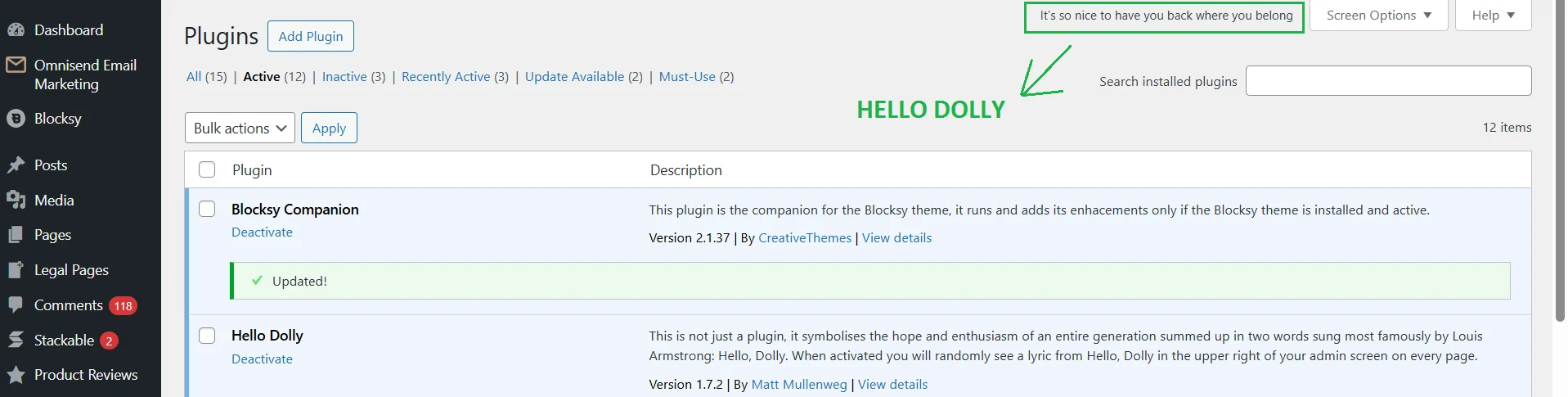
Example of Hello Dolly functionality in the WordPress admin panel
In 2026, they remain necessary and regularly appear in the list of essential WordPress plugins for the site:
- search engine optimization — Yoast SEO and All in One SEO have the longest history, but important tools are paid, while the relatively young Rank Math SEO application offers most features for free;
- security — Wordfence Security, Security Ninja, and Sucuri detect and block malicious requests, prevent SQL injections and XSS attacks, check core files, themes, and extensions for threats, prevent brute force methods, and support two-factor authentication (2FA);
- performance — WP Rocket, FlyingPress, LiteSpeed Cache automatically configure caching, minimize CSS/JS files, use "lazy" loading of images, clean the database;
- feedback forms — Contact Form 7, WPForms, Gravity Forms allow you to create contact forms, subscription forms, payments, surveys, etc., using a drag-and-drop principle;
- backups — UpdraftPlus, BackWPup, Duplicator automatically create copies of databases and files, upload them to Google Drive or Dropbox, and allow you to restore the site in a few clicks in case of hacking or errors;
- e-commerce — WooCommerce, SureCart, Easy Digital Downloads allow you to sell physical and digital goods, subscriptions directly on the site;
- page builders — Elementor, Beaver Builder, Bricks Builder allow you to create professional websites using a drag-and-drop interface with real-time changes without writing code.
However, recent years have significantly changed the market for WordPress extensions, adding extensions for deploying full-fledged ecosystems. And we are talking about the best AI plugins for WordPress:
- AI Engine and Jetpack AI — allow generating content, creating chatbots, and translating pages directly in the editor;
- CodeWP — artificial intelligence that becomes your personal programmer, allowing you to write clean PHP code based on your text request to create micro-functions without involving a programmer;
- Tidio (Lyro AI) — automates most customer support tasks, answering user questions based on your site's content;
- Angie from Elementor — an AI agent automatically reads your active plugins, theme configurations, and custom post types, then generates the code you need and conducts safe testing in a sandbox;
- WordLift — analyzes content, identifies key objects, and automatically generates complex JSON-LD schema markup, significantly improving visibility in search engines.
Interestingly, in addition to individual WordPress plugins with artificial intelligence, standard extensions are also implementing AI functions. For example, Elementor Editor Pro adds artificial intelligence directly into the native interface, allowing you to quickly write text and generate high-resolution images right in it. And Rank Math Content AI analyzes competitors in real-time, updates the optimization score of your material, and recommends internal and external links. So now even to connect AI to the site, you don't need to have programming skills and study tons of documentation — just choose plugins, learn how to install and configure them correctly.
How to install plugins on a WordPress site
Site owners on WordPress can install plugins through the admin panel, uploading a ZIP file, or manually via FTP. The easiest way is to use the admin panel, which has over 60,000 extensions from the official repository wordpress.org. To install purchased extensions, you can also use the admin panel by uploading the ZIP file received after purchase, or FTP, such as FileZilla Client.
Note that on April 9, 2026, WordPress 7.0 will be released. Now to install plugins on WordPress, a minimum PHP version of 7.4 is required, but for the best speed and security, it is better to have PHP 8.3 or higher. When you buy hosting for your site and become a Cityhost client, you can use the latest stable releases. However, to avoid breaking your web resource, Cityhost does not force updates, allowing you to do it manually in the control panel. So I recommend regularly checking for new PHP versions.
Installing WordPress plugins through the admin panel
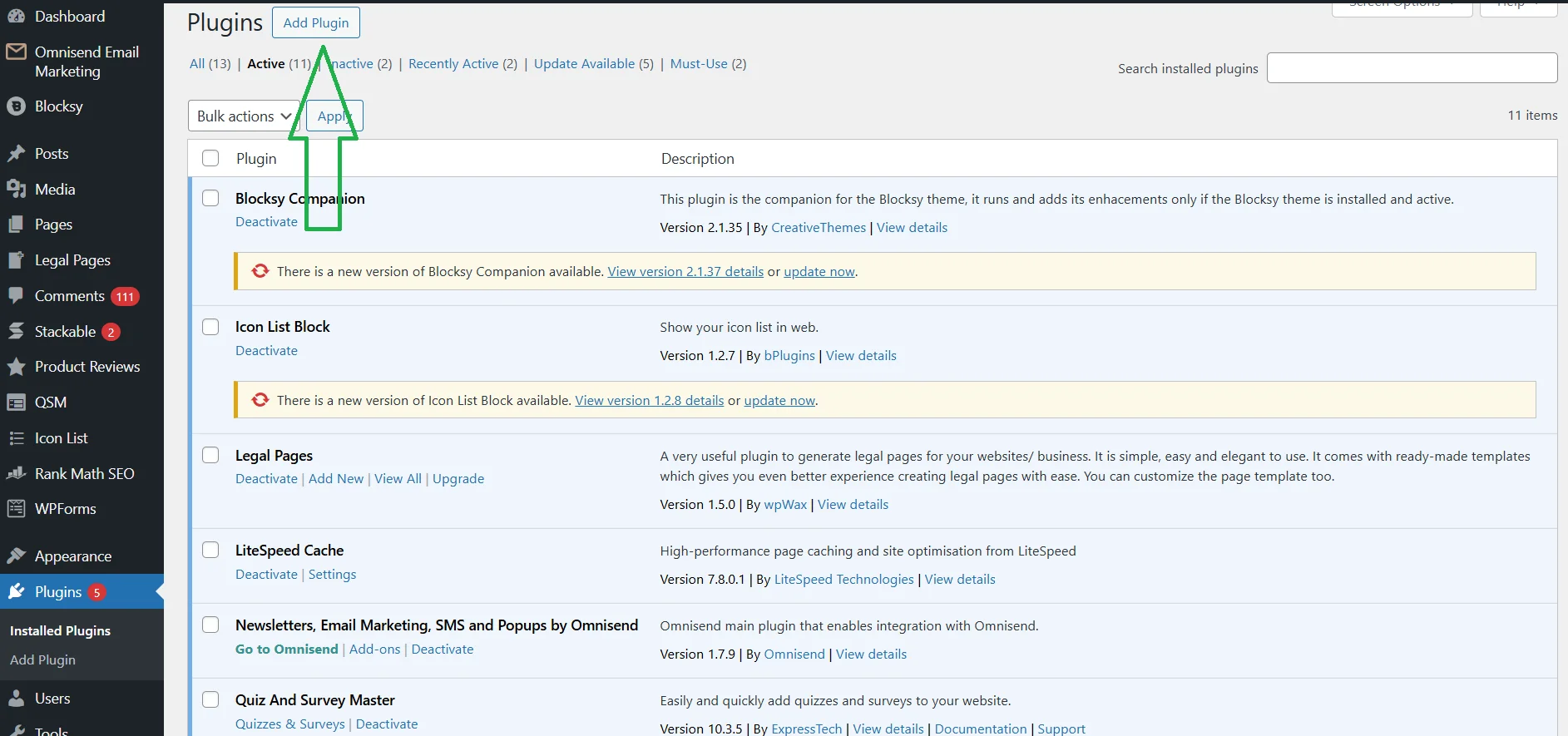
First, log in to your site's admin panel. In the left menu, go to the "Plugins" section and click "Add Plugin".
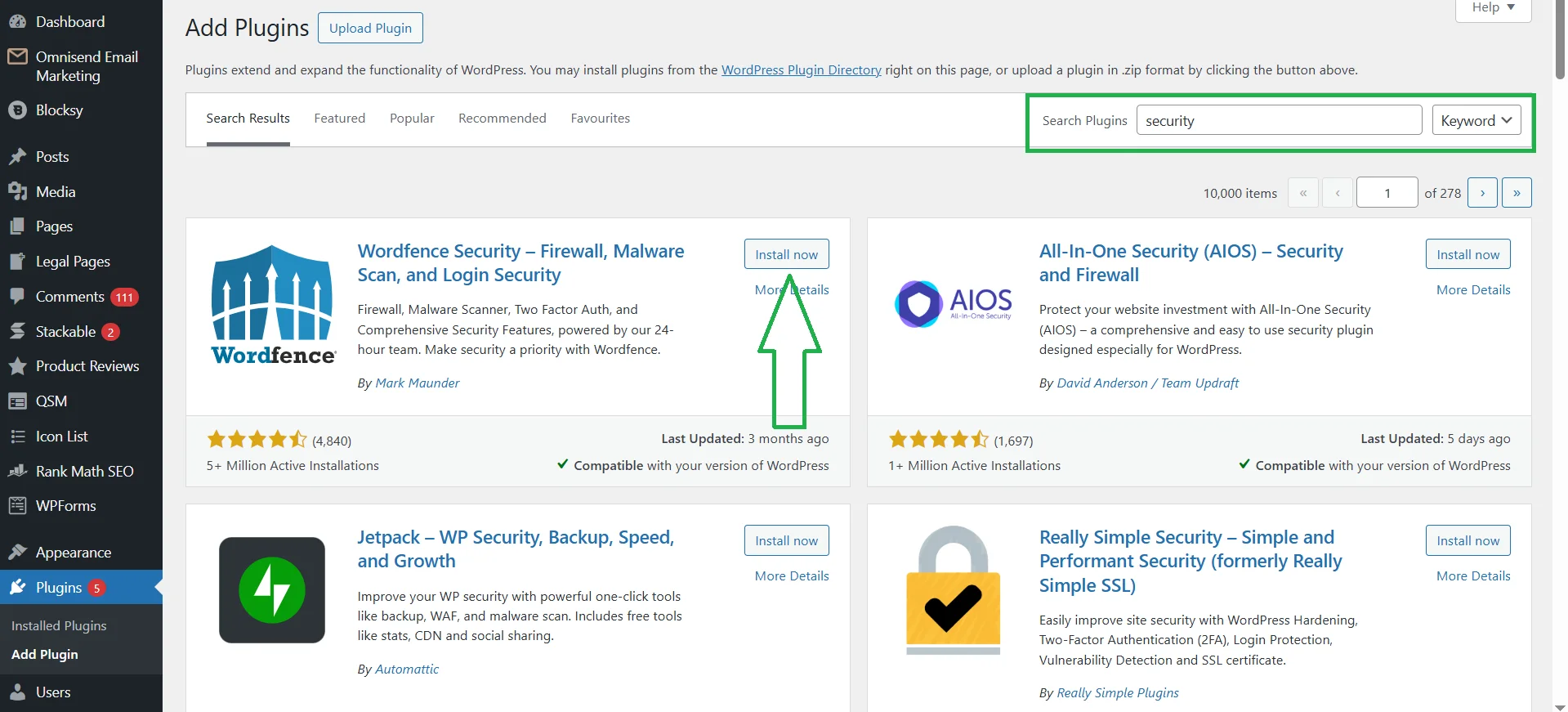
To quickly find the desired plugin, enter its name or function in the search bar, for example, "security". My control panel is in English, so I specify security, but you can use the Ukrainian language, which WordPress fully supports. And when you select the application, click "Install Now".
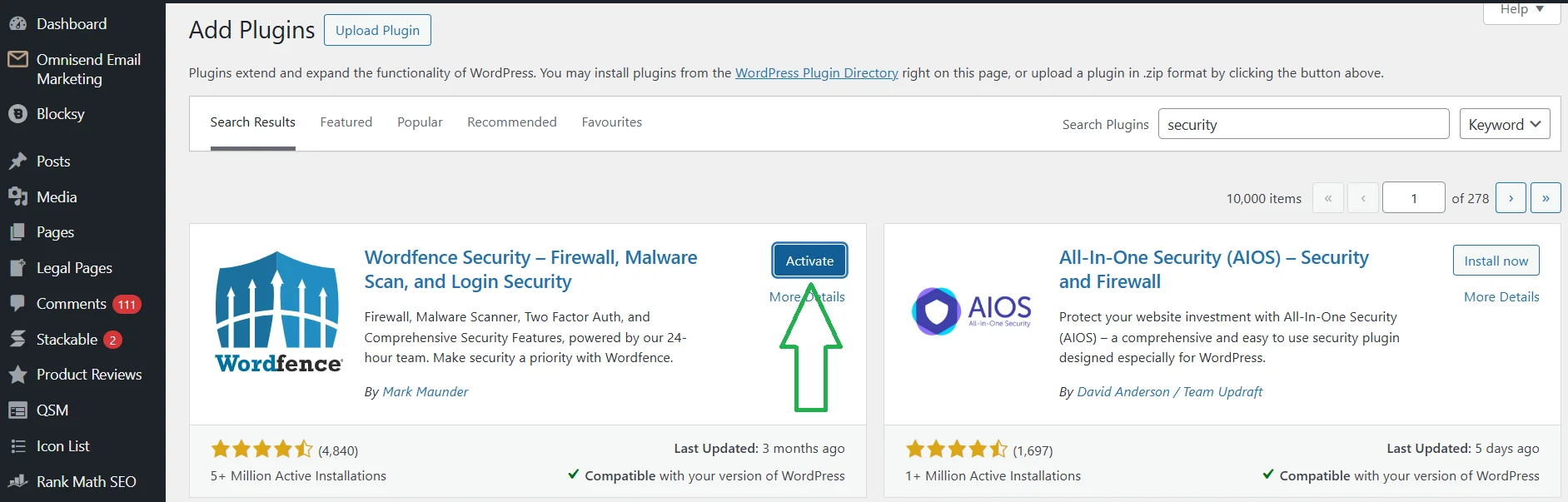
During the installation process, this button will change to "Installing". After that, you need to click "Activate".
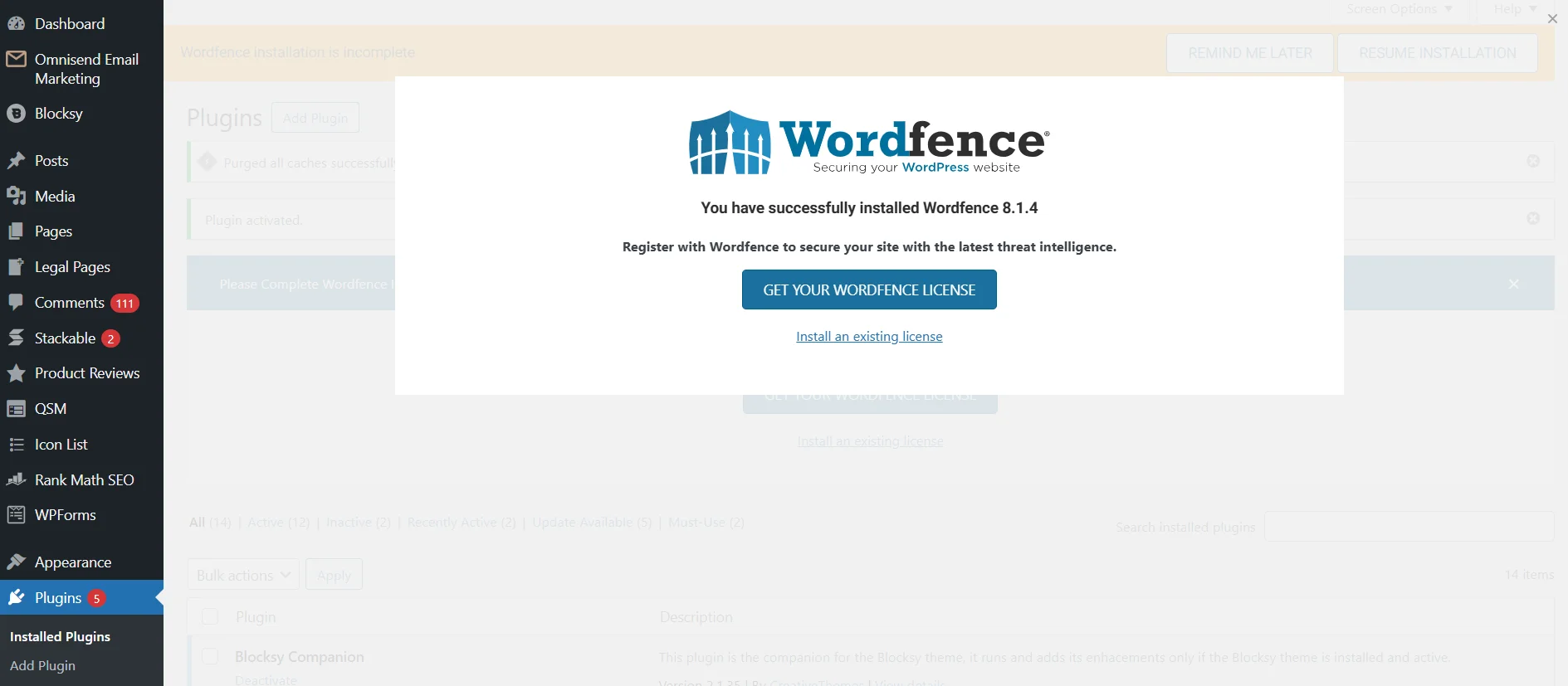
Note that extensions often redirect administrators to the settings page immediately after activation.
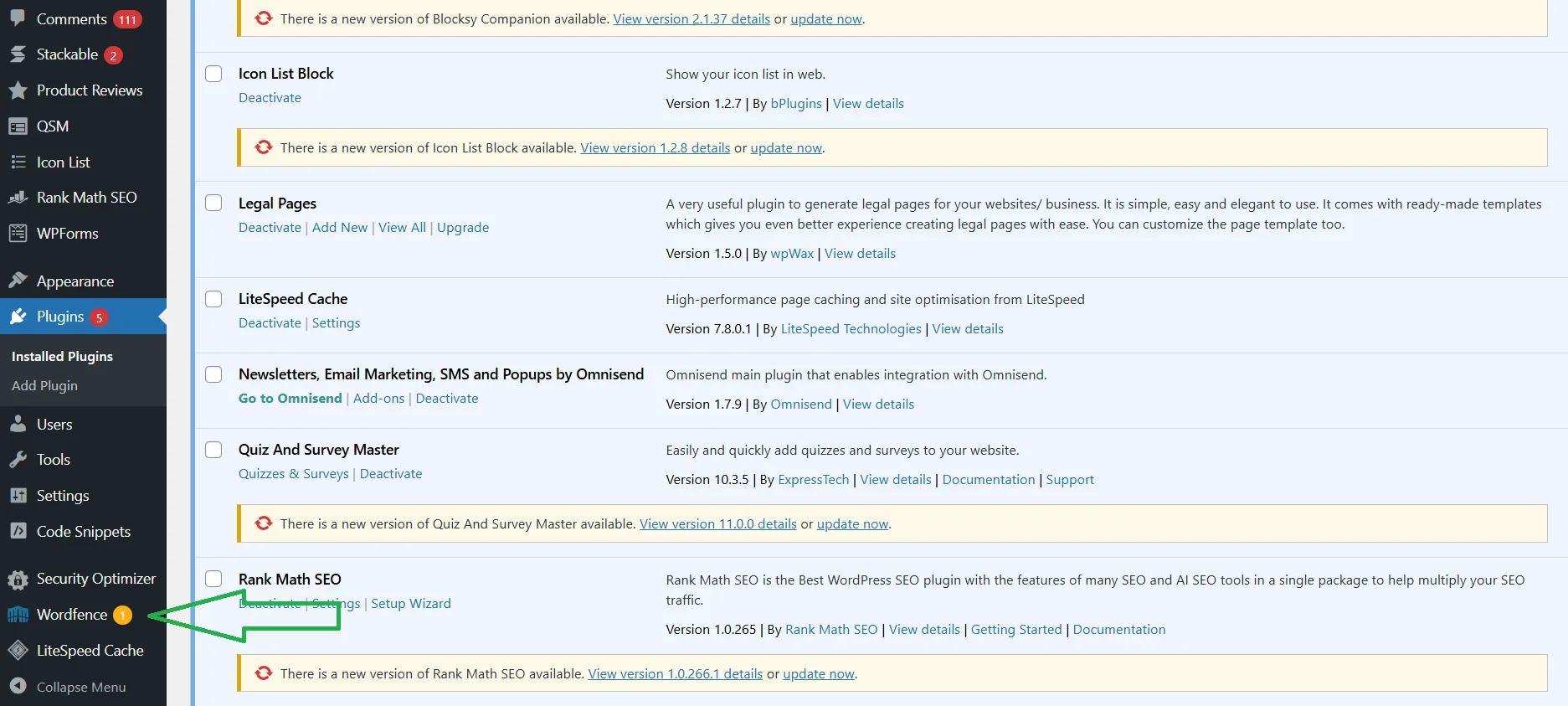
You do not have to perform the settings immediately. You can simply find the created section later, for example, in my case it is Wordfence, and go through the necessary steps. All plugin settings will also be located here.
Installing plugins on WordPress with a ZIP file
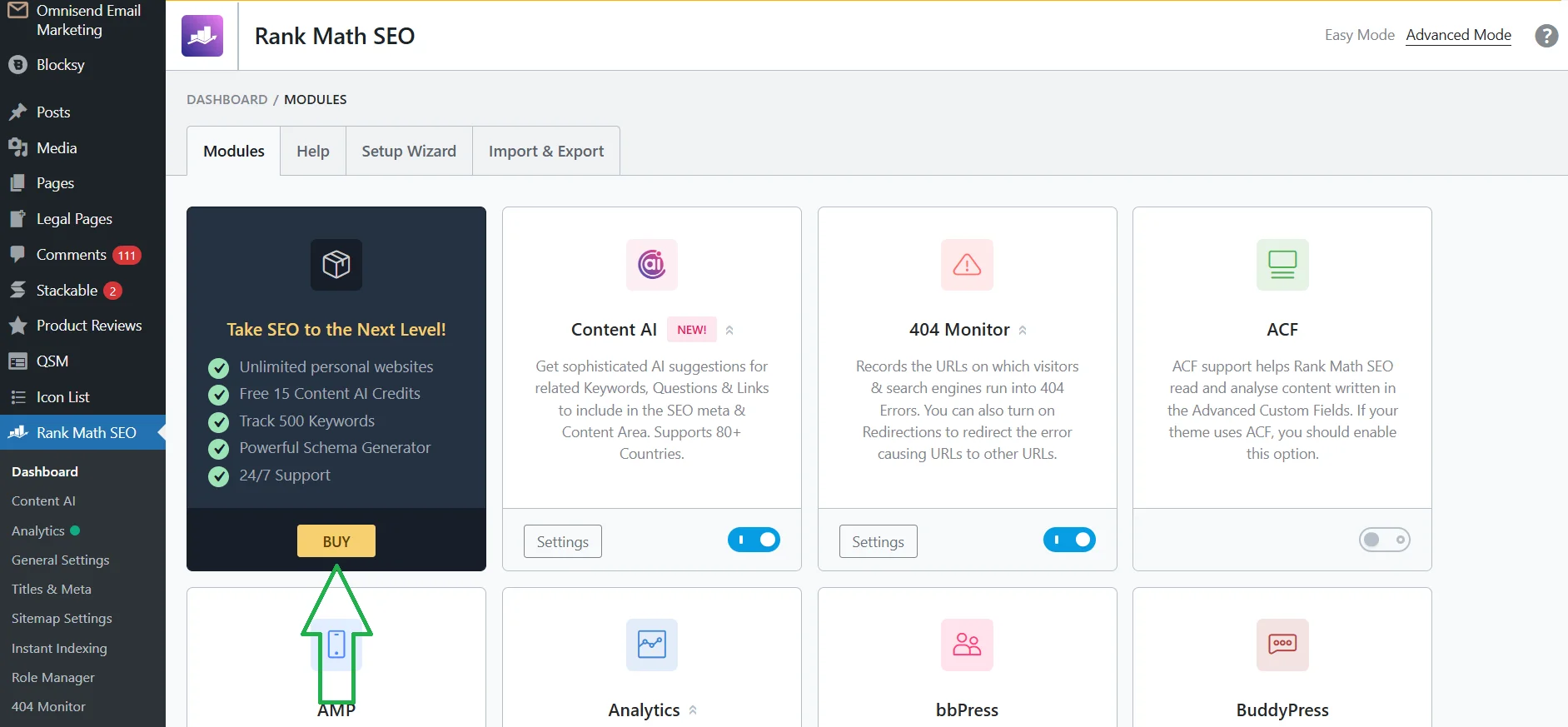
Many developers use a freemium strategy, that is, they offer a free version directly in the official repository, while charging for access to advanced functionality. For example, this is how Rank Math SEO works: the basic functionality is free, but for tracking keywords, a full-fledged markup generator (Schema), automatic broken link search, etc., the Pro, Business, or Agency version is required.
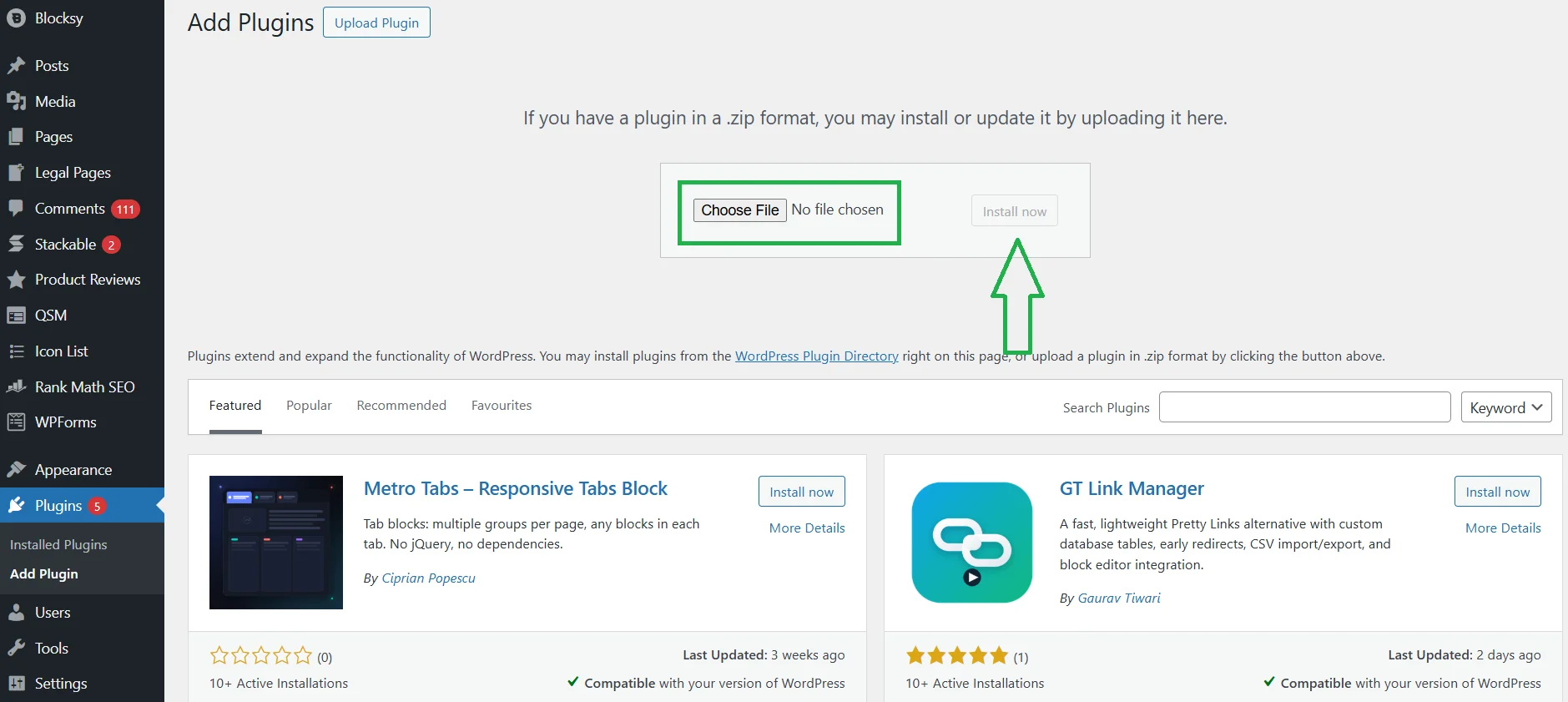
To connect the paid version, you need to purchase a subscription on the official site, after which you will receive a ZIP file. To install it, go to the "Plugins" → "Add New" section, select the file from your computer, and click "Install Now". After installation, do not forget to activate the extension.
Installing an application for WordPress via FTP
This method is often used for removing plugins, especially when after a new addition or experiments the site stopped working. But it is also suitable for adding an extension. You will only need an FTP client, such as the free FileZilla program, FTP access to your hosting (login, password, host), and the unpacked ZIP archive.
To upload the file, you need to:
- Unzip the plugin ZIP archive on your computer so that you have a separate folder.
- Connect to the site via the FTP client.
- Go to the /wp-content/plugins/ folder on your server.
- Upload the unzipped folder there.
- Return to the admin panel, go to the "Plugins" section, and activate this plugin in the list.
How to completely remove a plugin from a WordPress site
The removal process depends on the specific extension, as some of them may leave data on pages or in databases. In a previous article, where I talked about what Vibe Coding is, I decided to replace Quiz and Survey Master with an interactive widget from Claude. And now I can safely remove QSM.
To completely remove a WordPress plugin, let's go through the key steps together:
- Deactivate the extension in the "Installed Plugins" section.
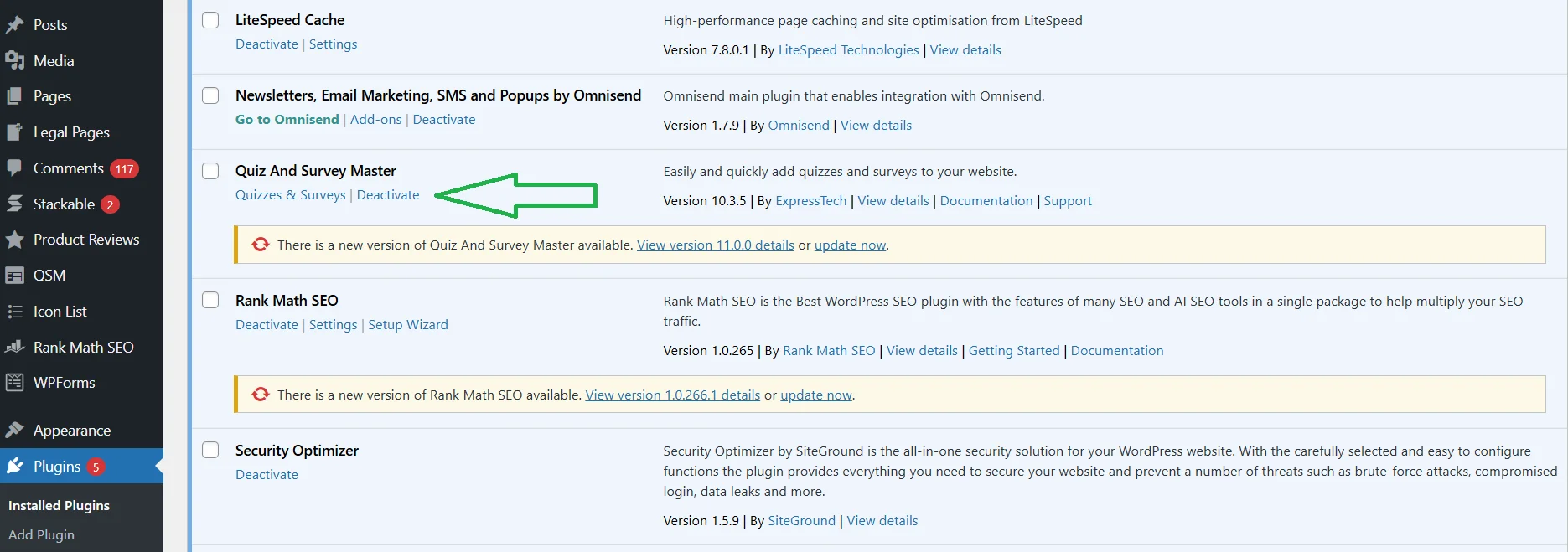
- Click the "Delete" button to remove the files from the server.
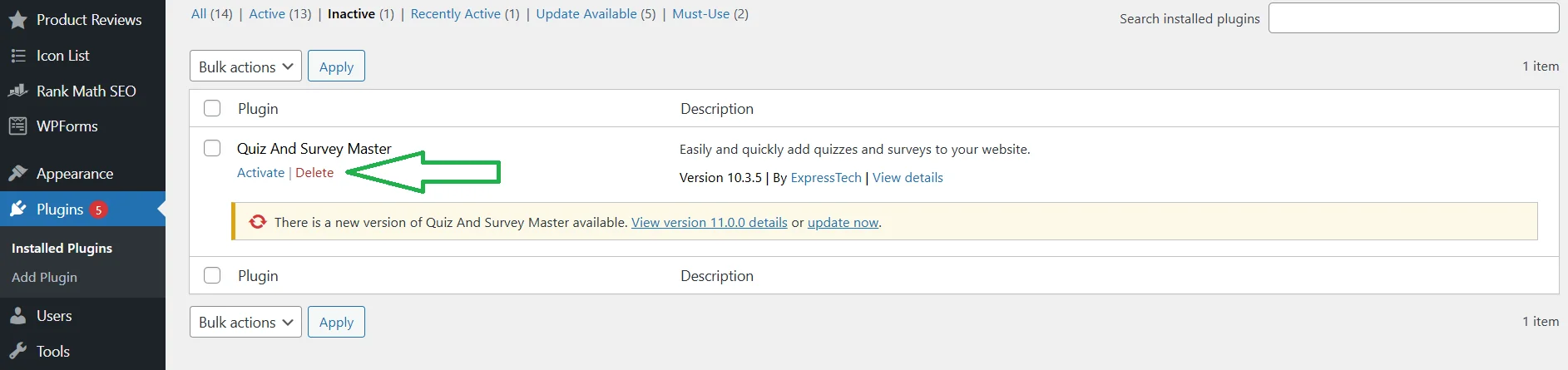
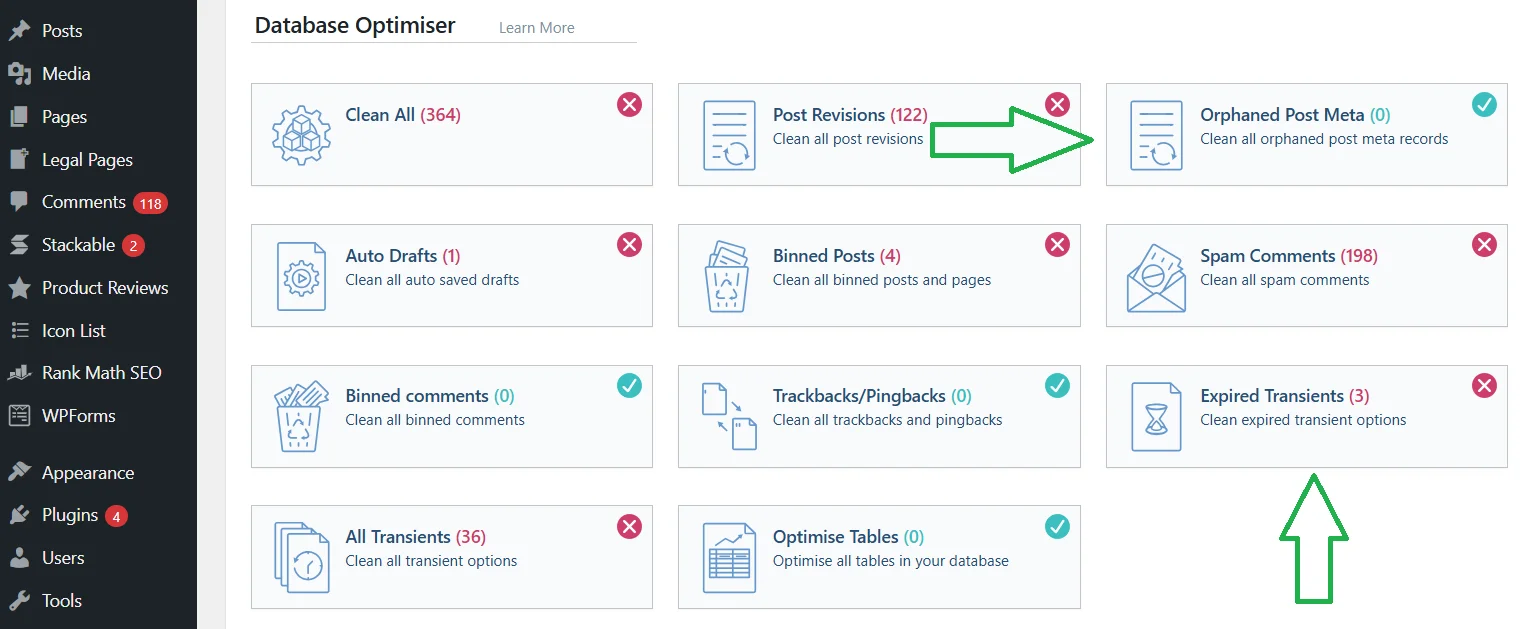
- Clean the database. Many plugins leave tables and records in wp_options — this is not critical. But if you regularly test and remove extensions, the database gradually becomes cluttered, and cleaning up old transients can speed up the site by 10-15%. For cleaning, you can use LiteSpeed Cache → Database: either click Clean All right away, or Expired Transients and Orphaned Post Meta (removes records that belonged to deleted posts and products, which are often created by cart or SEO plugins).
And do not forget to monitor the already installed WordPress plugins. If it hasn't been updated for more than 6 months, it may become vulnerable, and it's better to find a safer alternative. If you find a better option than what you already have, be sure to completely remove the old one to avoid duplication of functions.
How to use WordPress plugins without compromising site security
Extensions for content management systems — are the most common attack vector on web resources. According to the Patchstack State of WordPress Security 2025/2026 report, extensions are responsible for 90-96% of all vulnerabilities in the WordPress ecosystem. In 2026, the situation is further complicated by the development of artificial intelligence, which helps attackers find weaknesses in internet projects in a matter of minutes.
Of course, you can refuse them, limiting functionality as much as possible, but it is better to protect the site yourself, minimizing the risk of vulnerabilities in the code. And for this, I recommend adhering to proven security rules when choosing, installing, using, and removing plugins on WordPress:
- download plugins only from the official wordpress.org repository or verified developer marketplaces;
- never install "hacked" premium plugins, as they almost always contain hidden malicious code;
- pay special attention to negative reviews, especially about security and stability;
- before installing a new WordPress plugin, make a full backup of the site — this is not a pointless task, but a protection for the project in which you invest time and money;
- perform automatic updates only for security applications; for others — first create a backup, then update manually;
- do not leave deactivated plugins if you no longer need them — remove them completely;
- after deletion, always clean the database using LiteSpeed Cache Database Optimiser or other tools to avoid leaving vulnerabilities and cluttering the resource;
- after deletion, check the site for any remaining shortcodes, broken links, or empty blocks.
In summary, WordPress plugins in 2026 — are an extraordinary thing that can simplify site management and help it break into the TOP search results. But you can see how quickly technologies are evolving that are used to hack internet projects. So I advise you not to spare time analyzing extensions, proper installation and configuration, and if necessary — removal. Take the selection of extensions seriously, and then they can bring real benefits to the business without compromising the speed and security of the site.